
The phrase yaoi meaning began appearing in online conversations long before it became a mainstream search term. Originally rooted in Japanese fan culture, yaoi first surfaced in English-language discussions in the late 1990s and early 2000s, mainly within anime forums, manga communities, and early fan-fiction platforms.
As global access to anime, manga, and digital storytelling expanded, the term quickly spread beyond niche fandoms. By the 2010s, yaoi had become widely recognized on Tumblr, Reddit, and Twitter (now X), often used to describe romantic or emotional relationships between male characters—both fictional and original.
By 2026, the yaoi meaning has evolved even further. It is no longer limited to manga genres alone. Today, it is used in:
- Digital storytelling
- Online role-play
- Fan edits and AI-generated narratives
- Casual texting among Gen Z and Gen Alpha
Modern usage emphasizes emotional depth, character dynamics, and relationship storytelling rather than just genre labeling. This evolution reflects broader shifts in how people talk about identity, fiction, and online culture in 2026.
2. Headings Structure
What Does Yaoi Meaning Mean in 2026?
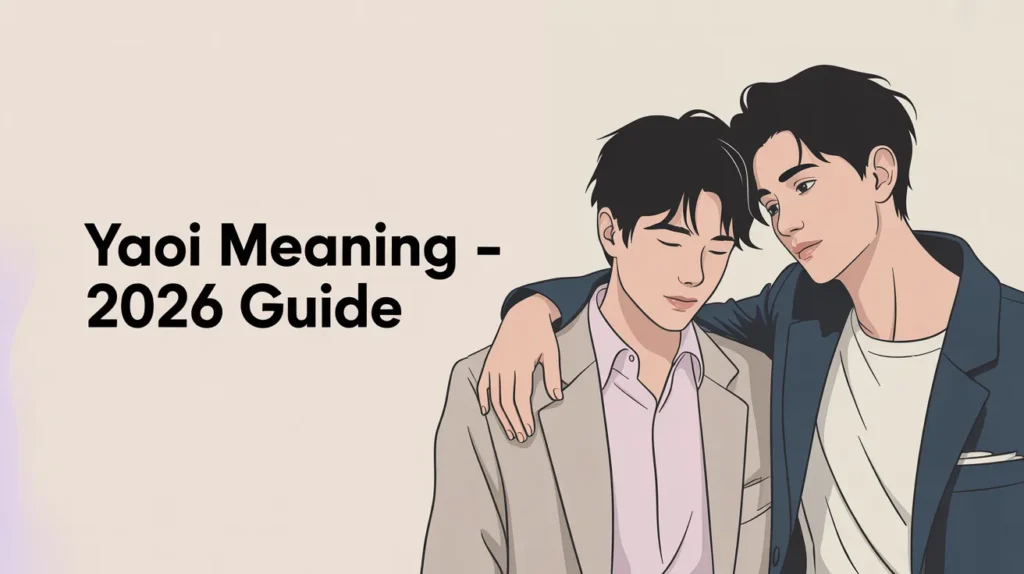
In 2026, yaoi meaning refers to fictional or narrative content that focuses on romantic, emotional, or dramatic relationships between male characters. Unlike its early definition, modern yaoi often prioritizes:
- Emotional bonding
- Character growth
- Story-driven romance
It is now commonly associated with inclusive storytelling rather than purely fan-service content.
Modern Usage of Yaoi Meaning
Today, yaoi is used across multiple platforms:
- Streaming community discussions
- AI storytelling prompts
- Fan-fiction platforms
- Digital comics and web novels
In many cases, the term is used casually to signal a relationship dynamic, not necessarily explicit content.
Yaoi Meaning in Texting & Social Media
In texting and social media, yaoi often appears as:
- A shorthand reference to male-male romance
- A tag or hashtag (#yaoi, #yaoistory)
- A descriptive label in comments or captions
Example:
“This series turned into full yaoi by episode 6.”
Examples of Yaoi Meaning in Real Chats
- “The author hinted at yaoi vibes between the leads.”
- “I’m writing a soft yaoi story, nothing dramatic.”
- “Fans are calling this arc pure yaoi energy.”
These examples show how relaxed and normalized the term has become in 2026.
Misunderstood Meanings of Yaoi Meaning
A common misconception is that yaoi always implies explicit content. In reality:
- Many yaoi stories are emotional or slow-burn
- Some focus purely on character connection
- Modern usage often overlaps with romance or drama genres
Understanding this helps avoid mislabeling or over-generalization.
Why People Still Use Yaoi Meaning in 2026
People continue using yaoi because:
- It’s culturally recognizable
- It quickly conveys relationship themes
- It remains relevant in fan-driven communities
- It adapts well to new digital storytelling formats
Its flexibility keeps it alive in evolving online spaces.
3. Comparison Table
| Abbreviation | Full Form | Meaning | Usage Example | Popularity Score (2026) |
|---|---|---|---|---|
| Yaoi | — | Male-male romantic storytelling | “This manga leans into yaoi themes.” | 9.2/10 |
| BL | Boys’ Love | Broader romantic genre | “I prefer BL with slow pacing.” | 9.5/10 |
| Shōnen-ai | — | Emotional male bonding | “It feels more shōnen-ai than yaoi.” | 7.8/10 |
| MLM | Men Loving Men | Inclusive relationship term | “MLM stories are trending.” | 8.6/10 |
4. 2026 Context
In 2026, digital culture values:
- Inclusive language
- Story-first narratives
- Emotional realism
As a result, yaoi meaning has softened, expanded, and modernized. It now fits naturally into AI storytelling tools, fandom-driven platforms, and casual digital communication.
5. Ending Section
Conclusion
The yaoi meaning has transformed from a niche fan term into a widely understood cultural reference. Its evolution mirrors how online communities grow, adapt, and redefine language over time.
FAQ
Q1: Is yaoi only used for manga?
No. In 2026, it’s used across fiction, AI stories, and social media.
Q2: Is yaoi always explicit?
No. Many modern yaoi stories focus on emotion and character development.
Q3: Is yaoi still relevant in 2026?
Yes. Its adaptability keeps it culturally relevant.
Final Summary
In short, yaoi meaning in 2026 represents a flexible, evolving term centered on male-male relationship storytelling—used across digital media, fandoms, and everyday online conversations.