

If you’ve ever blown your nose, looked at the tissue, and wondered “what does yellow snot mean?”, you’re definitely not alone. This is one of the most searched health-related questions online—and for good reason. Changes in mucus color can be surprising, uncomfortable, and sometimes worrying. Over the years, people have tried to decode what their body is telling them based on what comes out of their nose.
The phrase “what does yellow snot mean” began appearing in everyday conversations long before the internet, but it truly gained popularity in the early 2000s as health forums, parenting blogs, and medical Q&A websites became common. As people gained easier access to online health information, they started noticing patterns—clear mucus when healthy, yellow mucus when sick—and wanted answers.
By the 2010s, search engines and social media accelerated this curiosity. Parents, students, workers, and caregivers frequently Googled the question during cold and flu seasons. Short-form platforms like YouTube, TikTok, and Instagram later introduced quick health explanations, making terms like yellow snot, green mucus, and sinus infection part of everyday language.
Now in 2026, the meaning of yellow snot is better understood than ever—but myths still persist. Many people still believe yellow snot always means a bacterial infection or that antibiotics are required. In reality, the explanation is more nuanced.
In this complete guide, we’ll explain what does yellow snot mean, how the understanding of it has evolved up to 2026, how people talk about it today (even online), real-life examples, common misunderstandings, and why this topic remains relevant.
What Does What Does Yellow Snot Mean in 2026?
In 2026, yellow snot generally means:
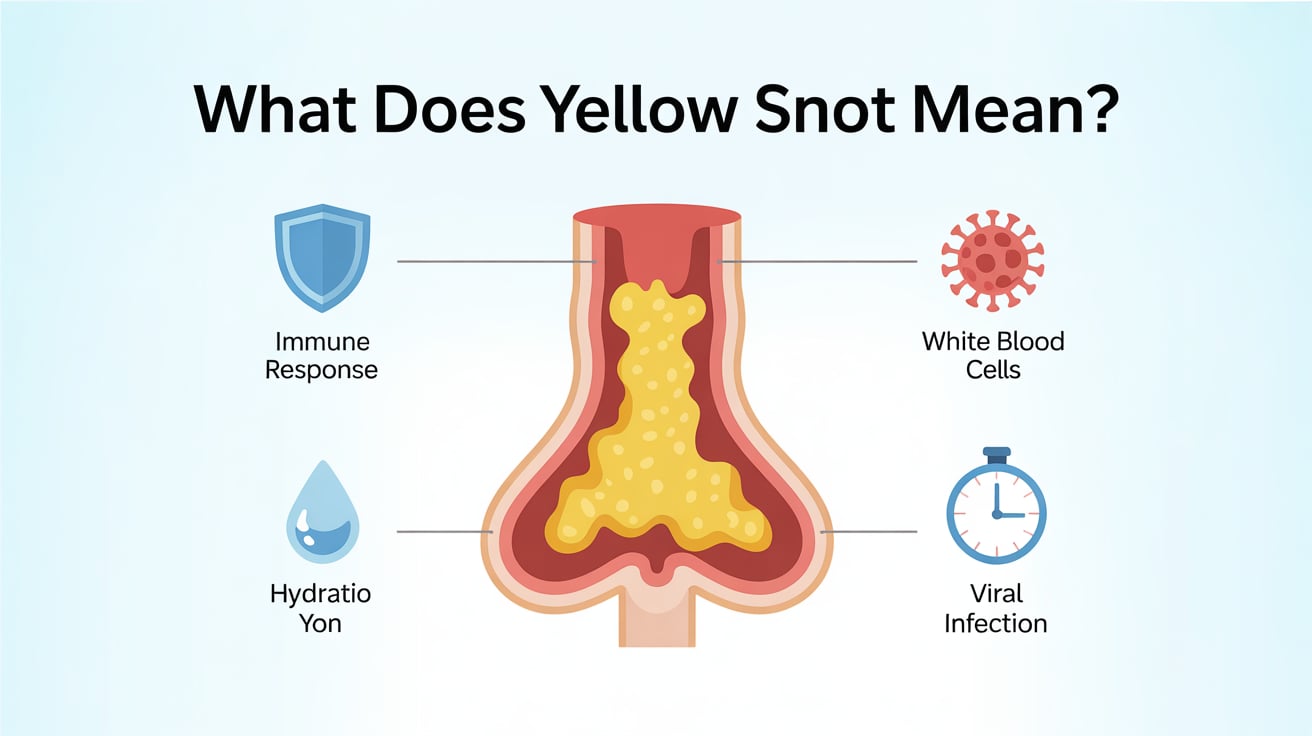
Your immune system is actively responding to an infection or irritation, usually from a virus.
The Science Behind Yellow Snot
Mucus (or snot) is produced by your nasal passages to:
- Trap dust, allergens, and germs
- Keep nasal tissues moist
- Protect your respiratory system
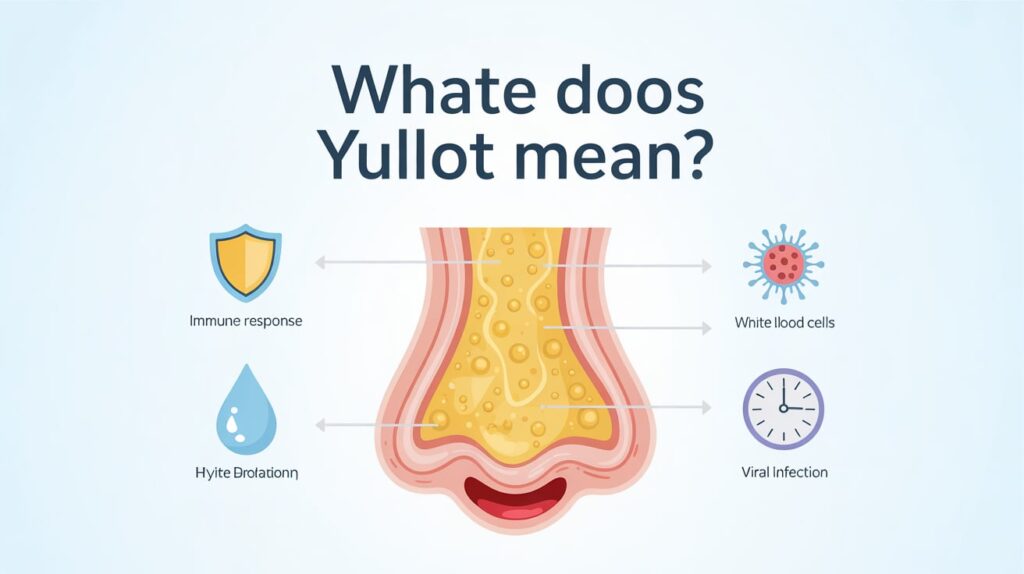
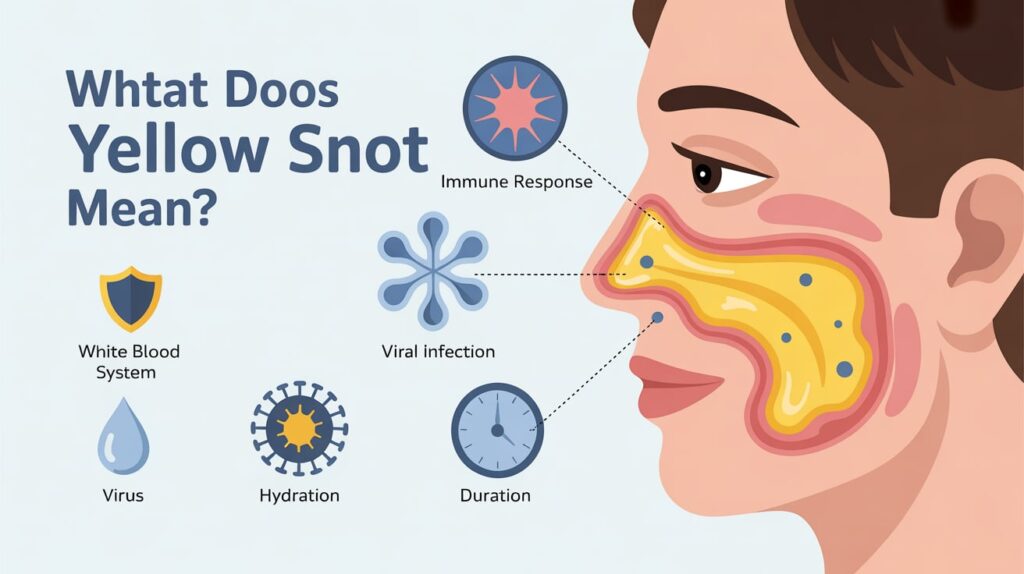
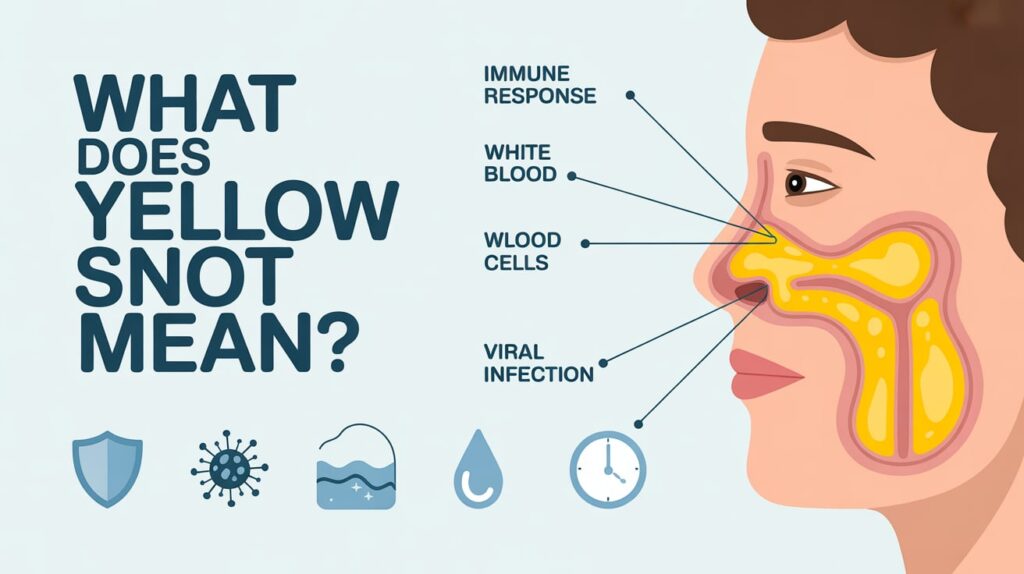
When you’re healthy, mucus is usually clear. When your body detects an infection—most often a cold or viral illness—your immune system sends white blood cells (especially neutrophils) to fight it.
These white blood cells contain enzymes that give mucus a yellowish tint.
Key Takeaway
👉 Yellow snot does not automatically mean a bacterial infection.
In most cases, it’s a sign your body is doing its job.
Modern Usage of What Does Yellow Snot Mean
In Health Conversations
People often mention yellow snot when describing symptoms.
Example:
“My nose is stuffy, and now I have yellow snot.”
In Parenting Discussions
Parents frequently use the term when monitoring children’s health.
Example:
“My toddler’s mucus turned yellow today—should I worry?”
In Workplace & School Talk
Used casually to explain feeling unwell.
Example:
“I’m staying home today—yellow snot and sinus pressure.”
In Telehealth Descriptions
Patients describe mucus color during virtual consultations.
Example:
“I’ve had yellow nasal discharge for three days.”
What Does What Does Yellow Snot Mean in Texting & Social Media?
Even health topics like yellow snot have found their way into modern digital communication.
Text Messages
Often shared casually or humorously.
Example:
“Pretty sure I’m sick—yellow snot and all 🤧”
Family Group Chats
Parents and caregivers discuss symptoms.
Example:
“His snot turned yellow this morning.”
Social Media Posts
Sometimes used humorously or descriptively.
Example Caption:
“Cold season update: yellow snot era.”
TikTok & Reels
Short educational clips explain mucus colors.
Example:
“Yellow snot doesn’t always mean antibiotics—here’s why.”
In 2026, health literacy has improved online, but simplified explanations still dominate social platforms.
Examples of What Does Yellow Snot Mean in Real Chats
Here are realistic examples showing how people talk about yellow snot in everyday conversations.
Example 1: Family Chat
Mom: “How are you feeling?”
Teen: “Still congested—yellow snot now.”
Example 2: Workplace Message
Coworker: “I’m WFH today, sinus pressure and yellow snot.”
Example 3: Parenting Forum
Post: “My baby has yellow snot but no fever—normal?”
Example 4: Friend-to-Friend
Friend: “I thought I was getting better, then yellow snot showed up.”
Example 5: Doctor Visit Summary
Patient: “Symptoms include nasal congestion and yellow discharge.”
What Causes Yellow Snot?
Understanding the causes helps answer what does yellow snot mean more clearly.
1. Common Cold (Most Common Cause)
- Viral infection
- Yellow mucus often appears after a few days
- Usually clears on its own
2. Sinus Inflammation (Sinusitis)
- Swollen sinus passages
- Mucus thickens and turns yellow
3. Allergies (Sometimes)
- Prolonged congestion can change mucus color
- Not always an infection
4. Dehydration
- Thicker mucus appears darker
- Can look yellow
5. Environmental Irritants
- Smoke, pollution, dust
- Can trigger immune response
What Yellow Snot Does NOT Automatically Mean
One of the biggest misconceptions is assuming the worst.
Common Myths
❌ Yellow snot means antibiotics are needed
❌ Yellow snot always equals bacterial infection
❌ Yellow snot means you’re highly contagious
❌ Yellow snot means something is seriously wrong
The Truth
Most cases of yellow snot:
- Are viral
- Improve within days
- Require rest and hydration, not medication
When Yellow Snot Might Be a Concern
While usually harmless, yellow snot can sometimes signal a need for medical attention.
Watch for These Signs:
- Symptoms lasting 10+ days
- Severe facial pain or pressure
- High or persistent fever
- Thick yellow or green mucus with foul odor
- Symptoms worsening instead of improving
In these cases, a healthcare provider may evaluate for bacterial sinus infection.
Why People Still Search What Does Yellow Snot Mean in 2026
1. Increased Health Awareness
People pay closer attention to bodily signs.
2. Seasonal Illness Cycles
Colds and flu still circulate every year.
3. Parenting & Caregiving Needs
Parents want reassurance and clarity.
4. Telemedicine Growth
Clear symptom descriptions matter more.
5. Persistent Online Myths
People seek accurate information to counter misinformation.
Comparison Table: Yellow Snot vs Other Mucus Colors (2026)
| Abbreviation | Full Form | Meaning | Usage Example | Popularity Score (2026) |
| Clear | Clear mucus | Healthy or early cold | “My nose is runny.” | ⭐⭐⭐⭐⭐ |
| Yellow | Yellow snot | Immune response | “I have yellow snot today.” | ⭐⭐⭐⭐⭐ |
| Green | Green mucus | Strong immune response | “Mucus turned green.” | ⭐⭐⭐⭐ |
| White | Thick mucus | Congestion/dehydration | “Stuffy nose, white mucus.” | ⭐⭐⭐ |
| Bloody | Blood-tinged mucus | Irritation/dryness | “A little blood in my mucus.” | ⭐⭐ |
How Understanding of Yellow Snot Has Evolved Over Time
Early Beliefs (Pre-2000)
- Yellow = bad infection
- Antibiotics commonly prescribed
2000–2015
- Medical research clarified viral vs bacterial causes
- Public awareness slowly increased
2016–2023
- Online health education expanded
- Fewer unnecessary antibiotics
2024–2026
- Better health literacy
- More nuanced understanding
- Symptom-based evaluation encouraged
Yellow Snot in Children vs Adults
In Children
- Very common during colds
- Immune systems still developing
- Often harmless
In Adults
- Usually linked to viral infections
- May linger due to stress or environment
In Older Adults
- Monitoring symptoms is important
- Hydration plays a bigger role
How to Manage Yellow Snot at Home
While not medical advice, common supportive care includes:
- Staying hydrated
- Resting
- Using saline sprays
- Humidified air
- Gentle nose blowing
Avoid overusing decongestant sprays unless directed.
Conclusion
So, what does yellow snot mean in 2026?
In most cases, it’s a normal sign that your immune system is working, especially during a cold or mild illness. Yellow snot does not automatically mean a serious infection or the need for antibiotics. Instead, it usually reflects white blood cells doing their job and helping your body heal.
Understanding this helps reduce anxiety, prevent unnecessary medication use, and encourages smarter health decisions. As health education continues to improve, knowing what yellow snot means empowers you to respond calmly and appropriately.
Frequently Asked Questions (FAQ)
What does yellow snot usually indicate?
An active immune response, often from a viral infection.
Is yellow snot bad?
Not usually—it’s often part of healing.
Does yellow snot mean sinus infection?
Not always. Duration and severity matter.
Should I see a doctor for yellow snot?
Only if symptoms are severe or persistent.
Is yellow snot contagious?
The illness causing it may be, not the color itself.
Final Summary
- Yellow snot usually means immune activity
- Common during colds and sinus congestion
- Not always a bacterial infection
- Often clears on its own
- Still widely searched in 2026
Knowing what does yellow snot mean helps you understand your body better and avoid unnecessary worry.