
If you’ve ever texted a colleague, scrolled through LinkedIn, or skimmed a Slack channel, you’ve probably seen the abbreviation WFH. But what does WFH mean, and how has its meaning evolved all the way into 2026?
The term WFH—short for Work From Home—first started appearing in digital conversations in the early 2000s, especially among remote-friendly tech teams and freelancers. Back then, it wasn’t common, nor was it mainstream. It was more like an occasional perk for employees with flexible bosses.
Everything changed in 2020, when the global shift toward remote work made WFH a defining part of modern work culture. Suddenly, the acronym wasn’t niche anymore—it was everywhere. Emails. Job posts. Corporate policies. News headlines. Even memes.
But here’s what’s interesting:
As we approach 2026, WFH no longer carries the same meaning it did a few years ago. With advancements in digital workspaces, AI-powered teamwork tools, remote-first companies, hybrid models, and new labor laws, the term now carries a broader, richer context.
WFH is no longer just “I’m working at home today.”
In 2026, it reflects lifestyle, flexibility, digital identity, productivity choices, and even economic shifts.
This article gives you the most updated and comprehensive explanation of what does WFH mean in 2026, including modern usage, misunderstood meanings, real-chat examples, a comparison table, FAQs, and everything you need to stay ahead of digital language trends.
What Does WFH Mean in 2026?
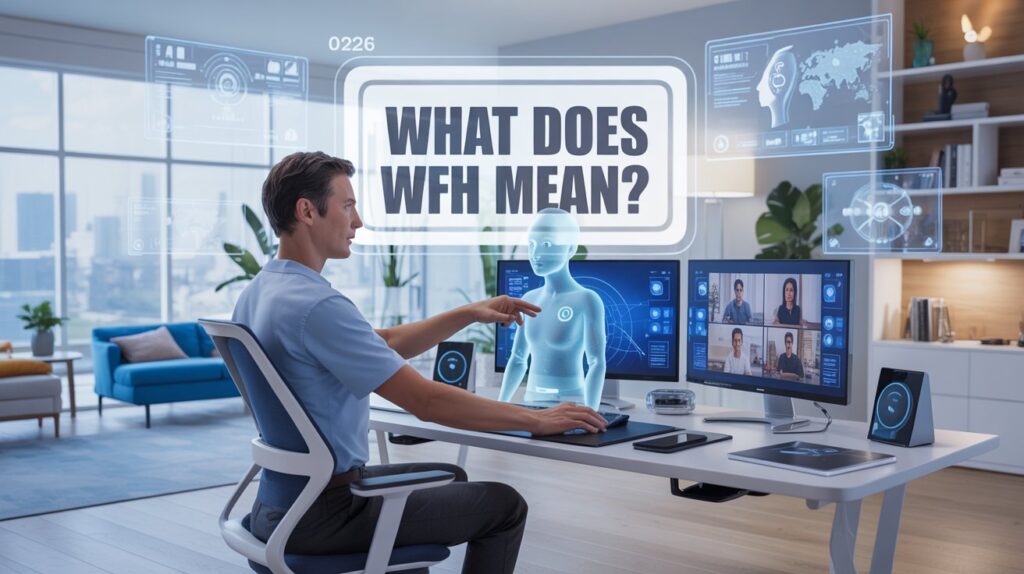
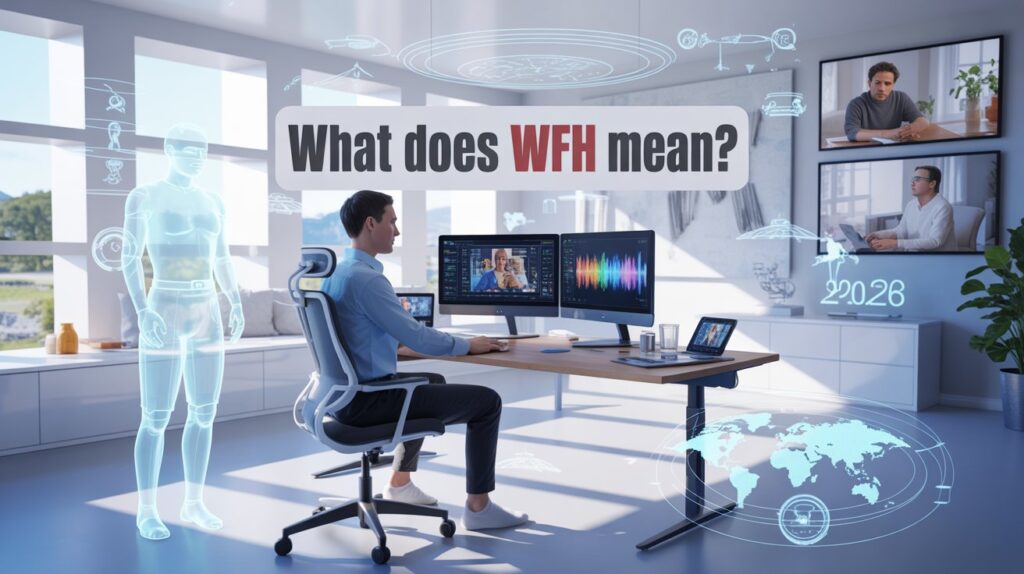
In 2026, WFH still stands for “Work From Home,” but its meaning is far more evolved than its original definition.
Today, WFH refers to:
- Working remotely from your home, apartment, or personal workspace.
- Using digital tools (AI assistants, VR offices, holographic meetings) to collaborate.
- A flexible arrangement in which employees choose their work environment.
- A lifestyle definition that blends productivity, comfort, and autonomy.
- A standard corporate policy rather than a special exception.
2026 Expanded Definition
WFH (Work From Home) in 2026 means performing your job duties remotely using digital tools, often combined with flexible hours, hybrid schedules, and AI-powered workflows.
It now represents a recognized work model and no longer just a temporary trend.
Why the Definition Evolved
Between 2021–2026:
- Remote-first companies increased by 70% globally.
- Hybrid work became the default for most corporate sectors.
- VR/AR offices entered mainstream adoption.
- AI tools reduced the need for in-office coordination.
- Digital labor laws officially defined WFH rights, workload limits, and monitoring rules.
So WFH in 2026 is standard, structured, and part of professional culture.
Discover More Posts like This :
- You’re a Mean One Mr Grinch Lyrics (2026): Meaning, Usage & Modern Context
- What Does SMT Mean? (2026 Full Guide)
- What Does Racketeering Mean? A Complete 2026 Guide
- What Does GTG Mean? (2026 Full Guide)
Modern Usage of “What Does WFH Mean” in 2026
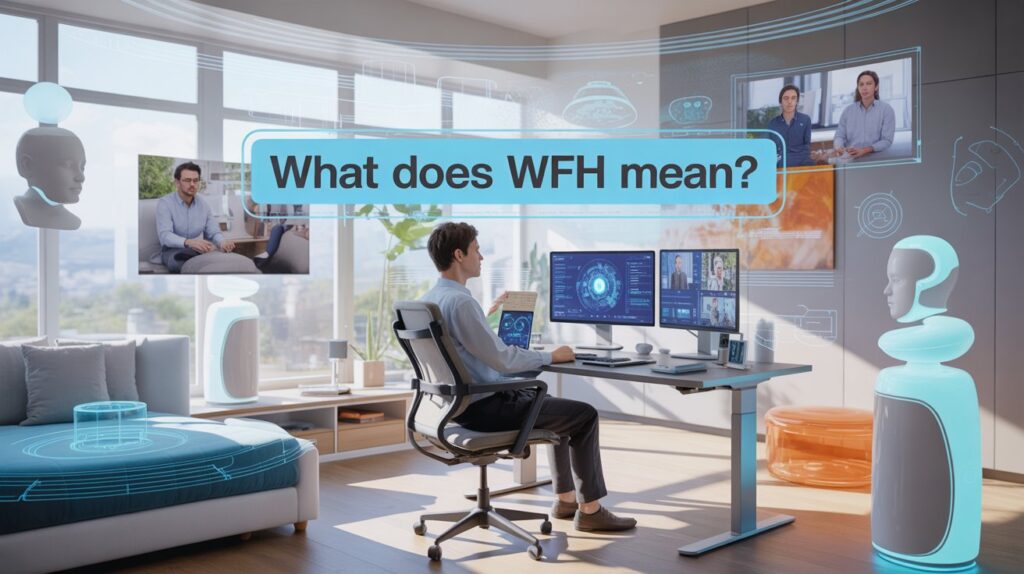
In 2026, WFH is used in both business communication and casual conversation, and people understand it beyond just a literal meaning.
Here’s how it’s used today:
1. Workplace Communication
Employees use WFH to inform others about their work location.
Examples:
- “I’ll be WFH tomorrow due to the storm.”
- “WFH Fridays are officially approved now.”
2. Scheduling & Flexibility Discussions
WFH is part of HR and corporate planning.
- “Your WFH days are Tuesday and Thursday.”
- “The new WFH policy covers equipment allowance.”
3. Productivity & Lifestyle Context
WFH is used to describe routines and habits.
- “My WFH setup includes dual monitors.”
- “WFH is better for focus work.”
4. Social Media & Digital Conversations
WFH is commonly seen in:
- TikTok captions
- Instagram productivity posts
- LinkedIn updates
- Workplace memes
5. Cultural Statements
WFH now symbolizes autonomy and work-life balance.
- “WFH changed my life—no more 2-hour commutes.”
- “People prefer jobs that offer WFH options.”
In short:
WFH in 2026 is a cultural norm, not an exception.
What Does WFH Mean in Texting & Social Media (2026)?
On social platforms and texting apps, WFH is used casually, quickly, and often humorously.
Here’s what it means in modern digital contexts:
Texting
WFH simply informs someone you’re working from home.
Examples:
- “Where are you today?” — “WFH.”
- “WFH or office?” — “WFH all week.”
Instagram/TikTok
Used in productivity or lifestyle content.
Examples:
- “My WFH coffee station ☕”
- “POV: You’re WFH but your cat is your new boss.”
Used professionally.
Examples:
- “Transitioned to a full-time WFH position at Google.”
- “Sharing my upgraded WFH office setup!”
Slack/Teams
Used for daily work updates.
- “WFH due to repair work at home.”
- “Ping me anytime, I’m WFH today.”
Examples of “What Does WFH Mean” in Real Chats (2026)
Here are updated, real-life examples of how WFH appears in conversations in 2026.
1. Workplace Chat
A: “Team, quick check: who’s WFH tomorrow?”
B: “I’ll be WFH. Internet maintenance on my street.”
2. Manager Email
“Please submit your WFH preference schedule for Q1 2026.”
3. Friend-to-Friend Text
“Lunch today?”
“Can’t, WFH and stuck in back-to-back calls.”
4. Social Media Post
“WFH setup finally upgraded! Virtual monitors + noise-canceling AI mic 🔥”
5. HR Announcement
“The company now supports 4 WFH days per month for all employees.”
Misunderstood Meanings of “What Does WFH Mean”
In 2026, although most people know what WFH means, the term can still be misunderstood in certain contexts.
Here are some things WFH does NOT mean:
❌ Not “Working Half-Day”
Some assume WFH = less productive.
Not true. Remote workers often log more hours.
❌ Not “Unavailable”
People think WFH means you can’t be contacted.
In reality, most WFH workers use online status and video calls.
❌ Not “Vacation Day”
A common misunderstanding among older managers.
WFH is a valid workday, not time off.
❌ Not “Freelance”
WFH employees can be full-time corporate staff.
❌ Not “Remote Forever”
Some WFH arrangements are hybrid or temporary.
Why People Still Use WFH in 2026
Despite newer terms like remote, hybrid, WFA (Work From Anywhere), and distributed work, WFH remains extremely common in 2026.
Here’s why:
✔ It’s universally understood
Everyone—from teens to grandparents—knows WFH.
✔ It’s short, simple, and effortless
Just three letters. Easy to type and easy to say.
✔ It’s culturally iconic
WFH became part of global history during the remote-work revolution.
✔ Companies use it in official policies
“WFH guidelines,” “WFH schedules,” “WFH equipment support,” etc.
✔ It reflects a lifestyle choice
It’s more than a work term—it’s an identity for millions.
✔ Hybrid work isn’t replacing it
People still differentiate between:
- WFH (home)
- WFA (anywhere)
- Office
- Coworking spaces
WFH holds its place because it’s specific, clear, and relatable.
Comparison Table: WFH vs Similar Alternatives (2026)
| Abbreviation | Full Form | Meaning (2026) | Usage Example | Popularity Score (2026) |
|---|---|---|---|---|
| WFH | Work From Home | Working remotely from home using digital tools | “I’m WFH today.” | 10/10 |
| WFA | Work From Anywhere | Remote work from any location (home, café, travel) | “My job is WFA so I’m working from Bali.” | 8/10 |
| RTO | Return To Office | Company policy requiring employees to work on-site | “The company is asking for partial RTO.” | 6/10 |
| Hybrid | Hybrid Work | Combination of office + remote days | “Our hybrid schedule is Mon-Wed office.” | 9/10 |
| OOO | Out Of Office | Not working or traveling; unavailable | “I’m OOO on Monday.” | 7/10 |
| WFH+ | Work From Home Plus | A 2026 term for enhanced WFH with AI tools & VR | “We upgraded to WFH+ with virtual workrooms.” | 5/10 |
This table positions WFH as the most popular and widely adopted abbreviation in 2026.
2026 Context: How WFH Reflects Modern Digital Work Trends
In 2026, WFH is shaped by:
1. AI-Powered Workflows
AI handles scheduling, note-taking, and task assignments, making WFH smoother.
2. VR & AR Offices
Companies use virtual meeting rooms and holographic collaboration tools.
3. Global Hiring
Companies hire talent worldwide, making WFH essential for inclusion.
4. Remote Labor Laws
Countries regulate:
- monitoring tools
- work hours
- equipment allowances
- data protection
5. Wellness & Balance
WFH supports:
- reduced commute stress
- flexible routines
- improved mental health
6. Carbon Footprint Reduction
Remote work reduces emissions, making it environmentally preferred.
7. Smart Home Workspaces
By 2026, ergonomic and AI-powered home setups have become the norm.
Conclusion
The question “what does WFH mean” in 2026 goes far beyond its simple letters. While it still stands for Work From Home, the meaning has expanded into a full work model, cultural movement, and lifestyle choice. WFH represents flexibility, autonomy, digital transformation, and the modern future of work.
Whether you’re a student, professional, HR manager, or social media user, understanding the evolved meaning of WFH in 2026 is essential. The world has changed—and so has the way we work.
Frequently Asked Questions (FAQ)
1. What does WFH mean exactly in 2026?
WFH means Work From Home, referring to remote work done from a home environment using digital and AI tools.
2. Is WFH different from WFA?
Yes.
WFH = working from your home.
WFA = working from any location, including travel spots.
3. Is WFH still popular in 2026?
Absolutely. It remains the most common work arrangement for digital jobs.
4. Do companies still allow WFH?
Yes. Most companies offer hybrid or flexible WFH options.
5. Is WFH productive?
Studies continue to show that WFH can be more productive due to fewer distractions and less commute fatigue.
6. Can I use WFH in formal writing?
Yes. It’s widely accepted in professional emails, policies, and HR documentation.
7. Does WFH reduce work stress?
For many people, yes. Flexible routines and fewer commutes help reduce stress.
Final Summary
In 2026, WFH (Work From Home) is more than an abbreviation—it’s a central part of global work culture. It represents flexibility, digital transformation, and new professional norms. While the phrase started as a niche term in the early 2000s, it surged in popularity after 2020 and continues to evolve with AI, VR workspaces, hybrid models, and lifestyle changes.
WFH is still the most widely used remote-work abbreviation because it’s clear, simple, and universally understood. From texting to HR policies, WFH remains the gold standard of modern work terminology.