
If you’ve seen the phrase “Pink Pony Club” popping up in playlists, TikTok captions, comment sections, or conversations and wondered what does pink pony club mean, you’re not alone. What started as a song title has grown into a cultural phrase, a symbol of self-expression, and a shared emotional shorthand—especially among Gen Z and digital-first communities.
The phrase “Pink Pony Club” first entered mainstream conversations in the early 2020s, primarily through pop music culture. It gained traction as listeners connected deeply with its themes of identity, freedom, and breaking away from expectations. As social media amplified music trends faster than ever, “Pink Pony Club” quickly became more than just a lyric—it became a vibe, a movement, and a meaningful metaphor.
By 2026, the meaning of “Pink Pony Club” has evolved far beyond its original context. Today, people use it to represent finding your place, embracing who you are, and choosing joy over judgment. Whether it’s referenced seriously, humorously, or symbolically, the phrase carries emotional weight that resonates with modern digital culture.
In this in-depth guide, we’ll explore what does pink pony club mean in 2026, how it’s used today, how it appears in texting and social media, common misunderstandings, and why people continue to connect with it years after its rise.
What Does What Does Pink Pony Club Mean in 2026?
In 2026, “Pink Pony Club” generally means:
A symbolic place or mindset where people feel free to be themselves, unapologetically and joyfully.
It represents belonging, self-acceptance, and chosen identity, often in contrast to environments that feel restrictive, judgmental, or limiting.
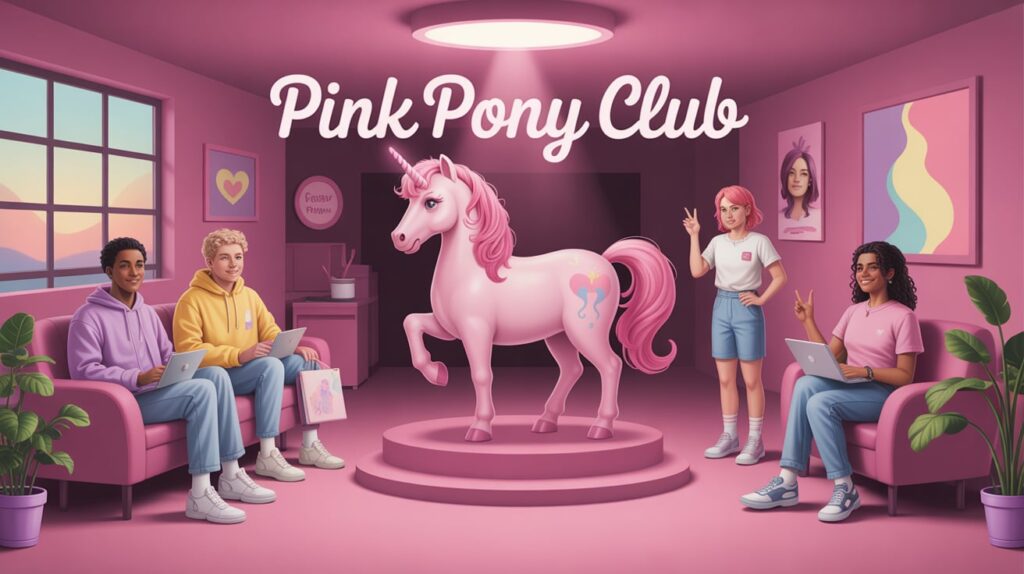
Rather than being a literal club, “Pink Pony Club” functions as a metaphor—a mental or emotional space where individuality is celebrated.
Core Meanings of “Pink Pony Club” in 2026
- A safe space for self-expression
- Breaking away from traditional expectations
- Joyful rebellion
- Found family and belonging
- Pop-culture identity marker
1. A Safe Space for Self-Expression
At its heart, “Pink Pony Club” symbolizes a place where people can be authentically themselves.
Meaning:
“You don’t have to hide who you are here.”
Example:
“I finally found my pink pony club.”
2. Breaking Away from Expectations
The phrase often reflects leaving behind rigid norms—family, hometown, or societal pressures.
Example:
“Moving out felt like joining the pink pony club.”
3. Joyful Rebellion
Unlike aggressive rebellion, “Pink Pony Club” implies soft defiance—choosing happiness over approval.
Example:
“They didn’t get it, but I joined the pink pony club anyway.”
4. Found Family & Belonging
Many people use the phrase to describe a community that feels like home.
Example:
“These friends are my pink pony club.”
5. Pop-Culture Identity Marker
By 2026, referencing “Pink Pony Club” also signals familiarity with modern pop culture and online trends.
Modern Usage of What Does Pink Pony Club Mean
In 2026, “Pink Pony Club” is used across music, fashion, social media, and everyday conversation. Its usage has shifted from specific reference to broader symbolic language.
Common Modern Uses
- Describing a personal transformation
- Referring to queer-friendly or creative spaces
- Expressing freedom or independence
- Captioning photos that feel expressive or bold
- Using it as shorthand for “I belong here”
Tone of Usage
The tone is usually:
- Playful
- Emotional
- Empowering
- Nostalgic
- Celebratory
What Does What Does Pink Pony Club Mean in Texting & Social Media?
On digital platforms, “Pink Pony Club” is often used without explanation—because its meaning is felt rather than defined.
On TikTok
TikTok played a major role in spreading the phrase.
Example captions:
“POV: you finally join the pink pony club 🩷🐴”
“This song made me brave enough to join the pink pony club.”
On Instagram
Often used in captions, bios, or reels.
Example:
“Living my pink pony club era.”
On Twitter / X
Used emotionally or reflectively.
Example:
“Everyone deserves their own pink pony club.”
In Text Messages
Used between friends who share cultural context.
Example:
“College feels like my pink pony club.”
In Bios & Usernames
By 2026, “Pink Pony Club” has become a personality identifier.
Examples of What Does Pink Pony Club Mean in Real Chats
Here are realistic examples of how people use the phrase today.
Example 1: Emotional Growth
“Leaving home was scary, but I found my pink pony club.”
Example 2: Friendship
“This group chat is my pink pony club.”
Example 3: Humor
“I wore pink boots today. Pink pony club behavior.”
Example 4: Creative Identity
“Art school is basically the pink pony club.”
Example 5: Supportive Message
“You’ll find your pink pony club one day.”
Misunderstood Meanings of What Does Pink Pony Club Mean
Because the phrase sounds whimsical, it’s often misunderstood.
Common Misconceptions
❌ It’s a real place or club
❌ It’s only about partying
❌ It’s only for one group of people
❌ It has no serious meaning
What It Actually Is
✔ A metaphor
✔ A symbol of belonging
✔ A cultural reference
✔ An emotional concept
Is “Pink Pony Club” Sexual or Inappropriate?
No. While it can be associated with nightlife or freedom, its core meaning is emotional and symbolic, not explicit.
Why People Still Use What Does Pink Pony Club Mean in 2026
Despite new trends emerging constantly, “Pink Pony Club” remains relevant.
1. Emotional Resonance
It captures the feeling of finally being seen.
2. Cultural Nostalgia
Early-2020s pop culture holds strong nostalgic value.
3. Universal Theme
Everyone wants a place where they belong.
4. Flexibility of Meaning
It adapts to personal experiences.
5. Digital Identity
It works perfectly as online shorthand.
Comparison Table: “Pink Pony Club” vs Similar Phrases (2026)
| Abbreviation | Full Form | Meaning | Usage Example | Popularity Score (2026) |
| PPC | Pink Pony Club | Safe space for self-expression | “Found my PPC” | ⭐⭐⭐⭐⭐ |
| Main Character | Main Character Energy | Living authentically | “Main character era” | ⭐⭐⭐⭐ |
| Soft Life | Soft Life | Choosing joy and peace | “Soft life vibes” | ⭐⭐⭐⭐ |
| Found Family | Found Family | Chosen community | “They’re my family” | ⭐⭐⭐ |
| Safe Space | Safe Space | Judgment-free zone | “This feels safe” | ⭐⭐⭐ |
2026 Digital & Cultural Context
Music Culture
Music remains the foundation of the phrase’s meaning.
LGBTQ+ Visibility
The phrase is widely embraced as affirming and inclusive.
Meme & Aesthetic Culture
“Pink Pony Club” fits perfectly into aesthetic-driven content.
Mental Health Conversations
It’s often used to describe emotional safety and healing.
When to Use “Pink Pony Club”
✔ Describing personal growth
✔ Celebrating individuality
✔ Expressing belonging
✔ Playful or aesthetic content
✔ Emotional storytelling
When Not to Use It
❌ Formal or professional settings
❌ Without understanding its context
❌ To mock or dismiss others
Conclusion
So, what does pink pony club mean in 2026?
It means finding or creating a place—real or symbolic—where you are free to be yourself. It represents belonging, joy, courage, and the decision to live authentically, even when others don’t understand.
From its beginnings as a pop-culture reference to its role as an emotional shorthand in digital life, “Pink Pony Club” has proven staying power. In a fast-moving online world, it remains meaningful because it speaks to something timeless: the human need to belong without pretending.
Frequently Asked Questions (FAQ)
What does pink pony club mean literally?
Literally, it refers to a fictional club, but symbolically it means a safe, joyful space.
Is Pink Pony Club a real place?
No, it’s a metaphor, not a physical location.
Why is Pink Pony Club popular?
Because it represents freedom, belonging, and self-expression.
Is Pink Pony Club still relevant in 2026?
Yes, especially in digital and pop-culture communities.
Can anyone use the phrase?
Yes—its meaning is inclusive and personal.
Final Summary
- Originated in pop music culture
- Represents belonging and self-expression
- Widely used on social media
- Emotional and symbolic, not literal
- Still popular and relevant in 2026
Understanding what does pink pony club mean helps you connect with modern digital language, emotional storytelling, and contemporary culture.