

How “FS” Entered Digital Conversations
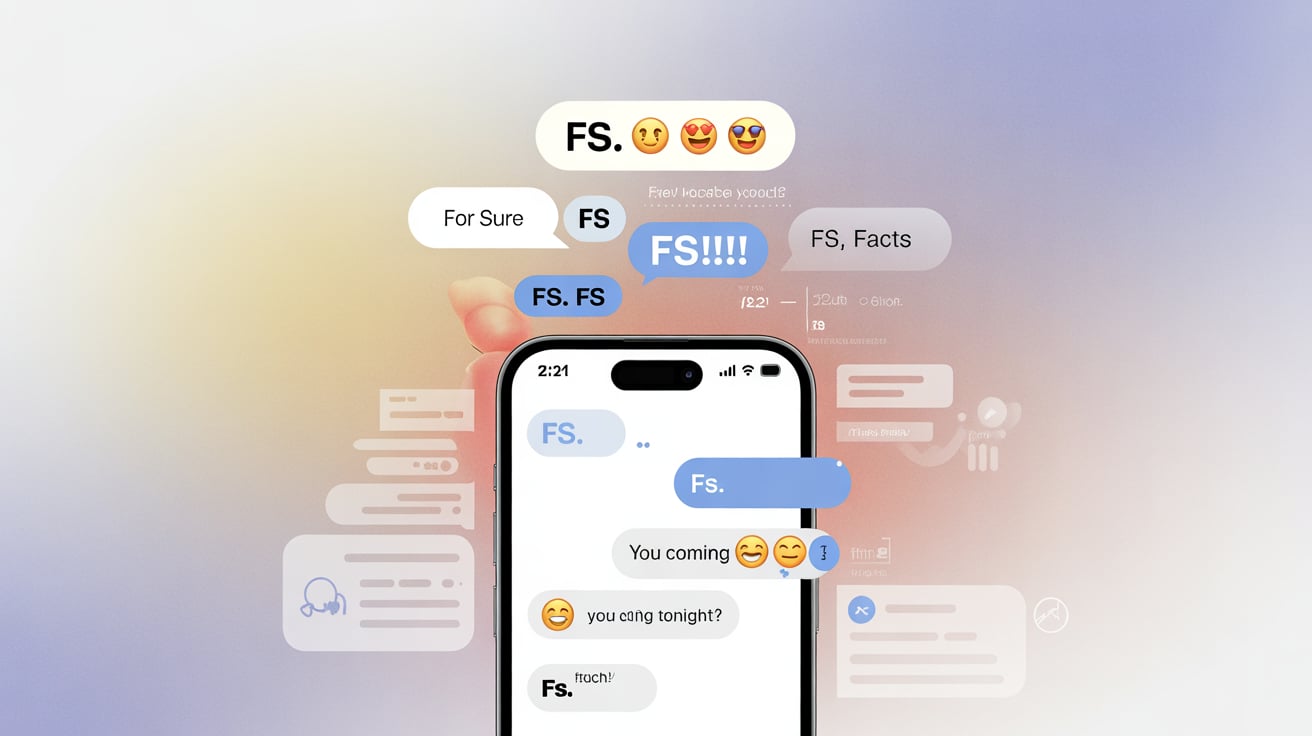
If you’ve ever been in a text conversation or scrolled through social media and seen someone reply with “fs”, you’re not alone in wondering what does fs mean. The abbreviation looks simple—just two letters—but its meaning has shifted, expanded, and adapted across platforms over time.
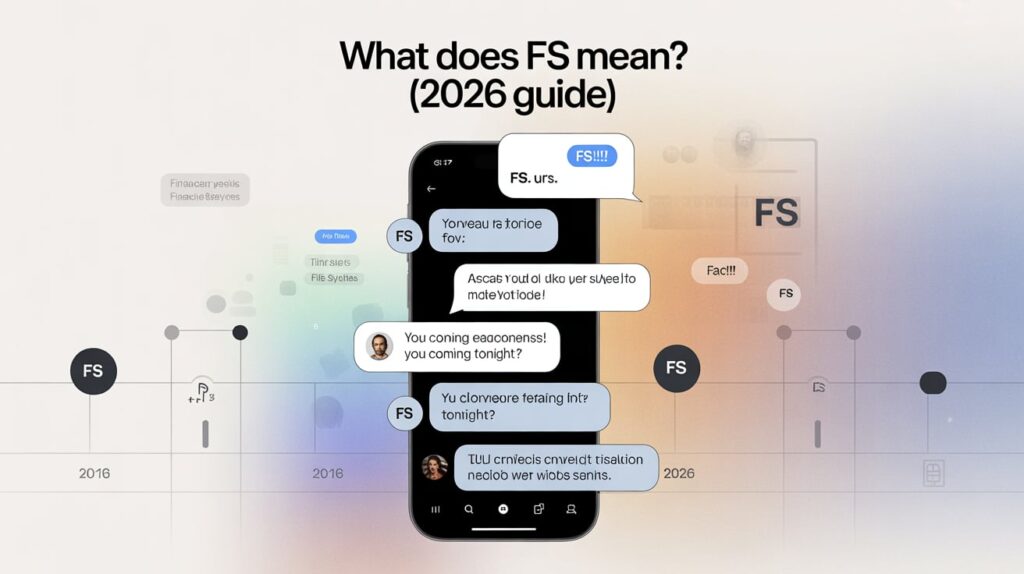
The phrase “fs” first appeared in casual digital conversations in the early-to-mid 2010s, especially in texting, gaming chats, and online forums. At a time when speed mattered more than grammar, users began shortening common phrases to save time. “Fs” quickly emerged as a flexible shorthand, often standing in for expressions like “for sure” or “facts.”
Its popularity grew alongside the rise of smartphones, messaging apps, and social media platforms like Twitter (now X), Snapchat, Instagram, and later TikTok. Short replies became the norm, and abbreviations like fs thrived in environments where quick acknowledgment or agreement was needed.
By the early 2020s, fs had become mainstream slang among Gen Z and younger Millennials. It wasn’t tied to one rigid definition anymore—it evolved depending on context, tone, and platform. By 2026, fs is no longer just slang; it’s a digital acknowledgment marker, a tone-setting response, and sometimes even a conversation shortcut that replaces full sentences.
So, what does fs mean in 2026? Let’s break it down in detail.
What Does FS Mean in 2026?
In 2026, the most common meaning of fs is:
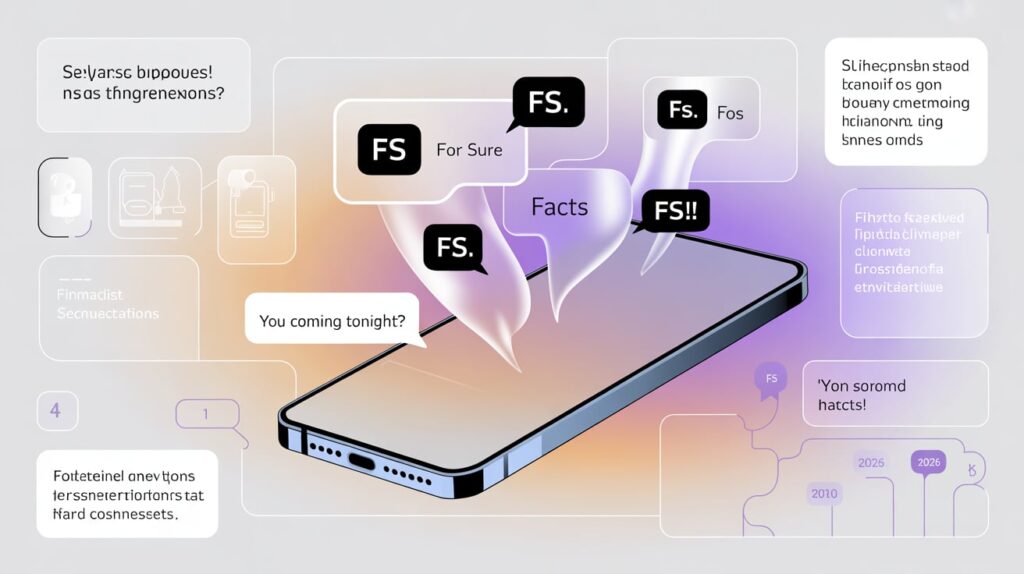
FS = “For sure”
It’s used to express agreement, confirmation, or certainty in a casual and friendly way.
Core Meaning in 2026
- Agreement: “Yes, definitely”
- Confirmation: “That’s correct”
- Reassurance: “I’m on board”
Example:
“Are you coming tonight?”
“Fs.”
In this context, fs replaces longer replies like:
- “For sure!”
- “Definitely”
- “Yes, 100%”
Secondary Meaning: “Facts”
Another widely accepted meaning of fs—especially on social media—is:
FS = “Facts”
Here, it’s used to show strong agreement with a statement, often emphasizing that something is undeniably true.
Example:
“This app update made everything worse.”
“Fs.”
In 2026, both meanings coexist, but “for sure” remains dominant in private conversations, while “facts” is more common in public or reactive spaces like comments and replies.
Modern Usage of What Does FS Mean
The way fs is used in 2026 reflects broader digital communication trends: shorter replies, emotional efficiency, and tone-based messaging.
1. FS as a Standalone Response
Fs is often sent alone as a complete message.
Example:
“That concert was insane.”
“Fs.”
This single word conveys:
- Agreement
- Shared experience
- Emotional alignment
2. FS Within a Sentence
Fs is also embedded into longer replies.
Examples:
- “Fs we should do that again.”
- “Fs, I agree with you on that.”
- “That’s fs the best episode.”
3. FS for Emotional Validation
In 2026, fs is frequently used to validate someone’s feelings.
Example:
“I’m so burned out from work.”
“Fs, you’ve been doing too much.”
Here, fs means:
- “I understand”
- “You’re right”
- “Your feelings make sense”
4. FS vs Tone
Tone matters. Depending on context, fs can feel:
- Supportive
- Casual
- Enthusiastic
- Neutral
Adding emojis or punctuation can change its tone:
- “Fs 😂” → playful
- “Fs.” → calm or serious
- “FS!!!” → excited or emphatic
What Does FS Mean in Texting & Social Media?
Understanding what does fs mean requires looking at how it’s used differently across platforms in 2026.
FS in Texting
In private texts, fs almost always means “for sure.”
Common Scenarios:
- Making plans
- Confirming details
- Agreeing casually
Examples:
- “We meeting at 8?” → “Fs”
- “You down to help?” → “Fs, I got you”
FS on Social Media
On platforms like TikTok, Instagram, and X, fs often means “facts.”
Examples:
- Commenting on a relatable post: “Fs 💯”
- Replying to an opinion: “Fs, couldn’t agree more”
FS in Group Chats
Fs works as a low-effort group acknowledgment.
Example:
Friend A: “Let’s just order pizza.”
Friend B: “Fs.”
Friend C: “Fs.”
No one needs to elaborate—agreement is clear.
FS in Gaming & Live Chats
In gaming and streaming chats, fs is used quickly to:
- Agree with strategies
- React to commentary
- Acknowledge teammates
Example:
“That was a bad call.”
“Fs.”
Examples of What Does FS Mean in Real Chats
To truly understand what does fs mean, it helps to see it in realistic, everyday conversations.
Example 1: Planning
Text:
“Movie tonight?”
“Fs, what time?”
Meaning: Yes, definitely.
Example 2: Emotional Support
Text:
“This week has been exhausting.”
“Fs, you deserve a break.”
Meaning: I understand and agree.
Example 3: Social Media Comment
Post: “Sleep is underrated.”
Comment: “Fs.”
Meaning: Facts / That’s true.
Example 4: Agreement in Debate
Text:
“Remote work is way better.”
“Fs, no commute alone makes it worth it.”
Meaning: Strong agreement.
Example 5: Casual Confirmation
Text:
“You already ate?”
“Fs.”
Meaning: Yes, for sure.
Misunderstood Meanings of What Does FS Mean
Because fs is so short, it’s sometimes misunderstood—especially by people unfamiliar with modern slang.
1. FS as “Financial Services”
In professional or corporate contexts, FS can mean Financial Services.
Why it’s different:
- Used in emails, reports, or job titles
- Not slang-based
2. FS as “File System”
In tech or programming discussions, FS often stands for File System.
Example:
“The FS needs restructuring.”
This meaning has nothing to do with texting slang.
3. FS as “Full Stop”
Rarely, fs can be interpreted as emphasis—similar to saying “period.”
This usage is uncommon in 2026 slang and usually inferred through tone.
4. Generational Confusion
Older users may misread fs as:
- Sarcastic
- Dismissive
- Lazy
In reality, fs is usually affirming and supportive, not rude.
Why People Still Use What Does FS Mean in 2026

Despite new slang appearing every year, fs remains popular in 2026 for several reasons.
1. Efficiency
Fs communicates agreement faster than typing:
- “For sure”
- “I agree”
- “That’s true”
2. Flexibility
Fs works across:
- Texts
- Comments
- DMs
- Group chats
- Gaming chats
3. Emotional Neutrality
It can be warm or neutral depending on context, making it safe to use.
4. Cross-Platform Consistency
Unlike trend-based slang, fs has stayed relevant across multiple platforms for over a decade.
5. Cultural Familiarity
By 2026, fs is widely understood among Gen Z and Millennials, making it a reliable response.
Comparison Table: FS vs Similar Alternatives (2026)
| Abbreviation | Full Form | Meaning | Usage Example | Popularity Score (2026) |
|---|---|---|---|---|
| FS | For sure / Facts | Agreement or confirmation | “You coming?” → “Fs.” | 9.5/10 |
| FR | For real | Serious agreement or emphasis | “That was wild.” → “Fr.” | 9/10 |
| Bet | Bet | Agreement / acknowledgment | “See you at 8.” → “Bet.” | 8.8/10 |
| Ong | On God | Strong truth or honesty | “This is amazing.” → “Ong.” | 8.5/10 |
| Facts | Facts | Strong agreement | “That’s unfair.” → “Facts.” | 8/10 |
| Yep | Yep | Casual yes | “Ready?” → “Yep.” | 7.5/10 |
Conclusion
So, what does fs mean in 2026? At its core, fs is a compact, versatile expression of agreement, confirmation, or shared understanding. Whether it stands for “for sure” in a text message or “facts” in a comment section, its purpose is the same: to quickly show alignment without overexplaining.
Its longevity proves that effective digital language doesn’t need to be complicated. Fs has survived shifting trends because it’s simple, adaptable, and emotionally intuitive. In a fast-paced online world, that’s exactly why it still works.
Frequently Asked Questions (FAQ)
What does fs mean in texting?
In texting, fs almost always means “for sure.” It’s used to confirm plans or agree with someone.
What does fs mean on social media?
On social media, fs usually means “facts,” signaling strong agreement with a post or opinion.
Is fs rude or dismissive?
No. In most cases, fs is neutral or supportive. Tone depends on context and punctuation.
Do older generations use fs?
It’s mostly used by Gen Z and Millennials, but its meaning is widely understood by 2026.
Is fs still popular in 2026?
Yes. Fs remains one of the most commonly used shorthand responses across platforms.