
If you’ve spent any time texting, scrolling social media, or browsing dating apps, chances are you’ve encountered the abbreviation DTF—and possibly paused to wonder, what does DTF mean? Despite being just three letters long, DTF carries a lot of cultural weight, history, and context that has evolved significantly over time.
When Did the Phrase “DTF” First Appear in Conversations?
The abbreviation DTF first entered mainstream conversations in the early 2000s, emerging from internet forums, early texting culture, and online chat rooms. At that time, abbreviations were popular because:
- Text messages had character limits
- Typing on old phones was slow
- Online slang was rapidly evolving
DTF was originally a direct and blunt shorthand for expressing romantic or sexual interest. Its shock value came from how quickly it conveyed intent without needing explanation.
How Did DTF Become Popular?
DTF gained massive popularity during the mid-to-late 2000s, especially through:
- Reality TV references
- Meme culture
- Internet humor forums
- Early dating websites
A major boost came when DTF was referenced in pop culture, cementing it as a widely recognized (and sometimes controversial) abbreviation. As dating apps grew in the 2010s, DTF became even more visible, often used to signal casual interest rather than long-term commitment.
How Has the Meaning of DTF Evolved Up to 2026?
By 2026, the meaning of DTF has softened, diversified, and become more context-dependent. While its original meaning is still understood, modern usage reflects:
- Increased awareness of consent
- Shifts in dating culture
- More humorous and ironic use
- Less shock value than in the past
Today, DTF isn’t always literal. It can be serious, joking, sarcastic, or purely meme-based, depending on how and where it’s used.
What Does What Does DTF Mean in 2026?
In 2026, when people ask what does DTF mean, the most accurate answer is both simple and nuanced.
Core Meaning of DTF
DTF stands for “Down To F*,” meaning someone is open to a casual romantic or physical encounter.**
However, modern usage extends beyond its original blunt intent.
Expanded Meanings in 2026
- Casual Interest (Consensual Context)
Indicates openness to something casual, not necessarily serious. - Joking or Ironic Use
Often used humorously to exaggerate enthusiasm for non-romantic things. - Meme or Cultural Reference
Sometimes used without literal intent at all. - Confidence Signal
In some contexts, it’s used to express confidence or boldness.
Tone Matters More Than Ever
By 2026, DTF without context can feel outdated or too direct, so people rely heavily on tone, emojis, and platform norms to clarify intent.
Modern Usage of What Does DTF Mean
How DTF Is Commonly Used Today
In 2026, DTF appears far less frequently in random conversations and more often in specific digital environments, such as:
- Dating apps
- Private messages
- Meme captions
- Close-friend group chats
It’s rarely used in professional or public-facing contexts due to its explicit undertone.
Modern Variations and Softened Usage
People often modify DTF to make it:
- Less direct
- More playful
- Clearly consensual
Examples include:
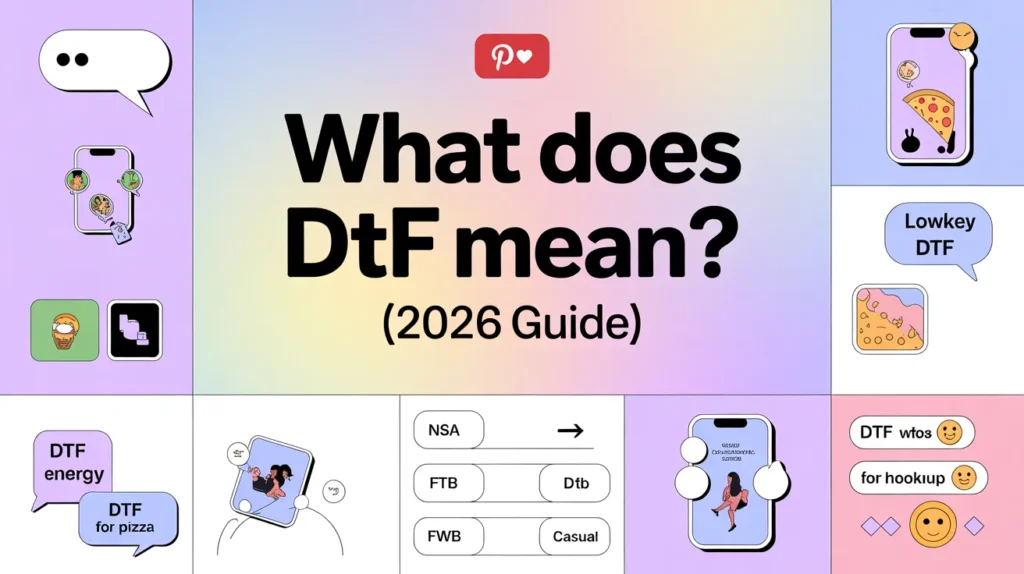
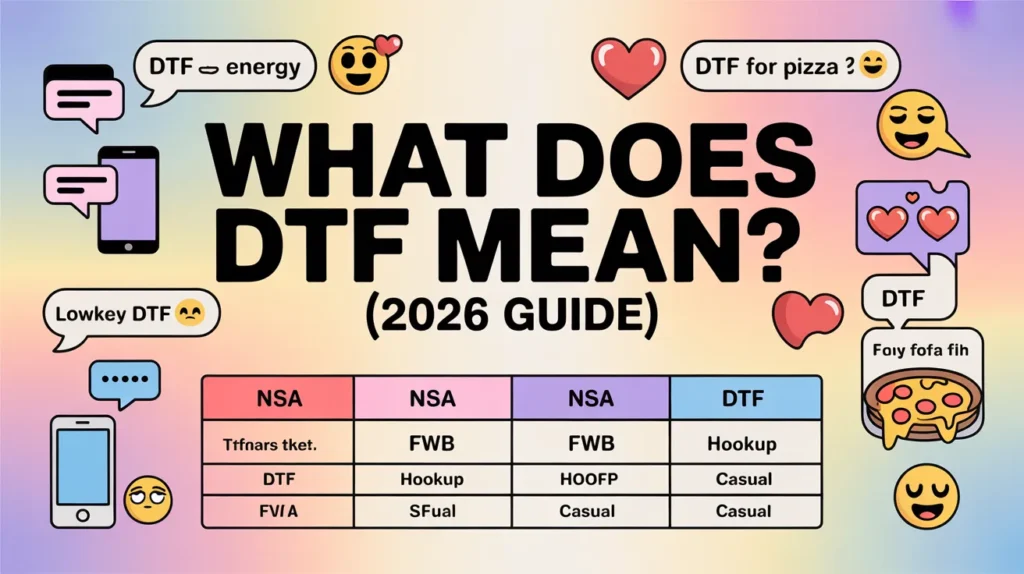
- “DTF energy”
- “Lowkey DTF”
- “DTF (respectfully)”
Humor-Based Usage
A big shift by 2026 is non-romantic joking usage:
“Am I DTF for pizza at midnight? Absolutely.”
Here, DTF simply means enthusiastically willing, not romantic.
What Does What Does DTF Mean in Texting & Social Media?
DTF in Text Messages
In texting, DTF is rarely used without context in 2026. When it is, it’s typically between people who already understand each other’s tone.
Example:
“Not gonna lie, I’m kinda DTF tonight.”
Meaning: Casual interest, but still ambiguous enough to invite conversation rather than pressure.
DTF on Dating Apps
Dating apps are where DTF retains its most literal meaning, though even here it’s used cautiously.
Common modern interpretations:
- Openness to casual dating
- Not looking for something serious
- Comfortable discussing attraction
Many users now avoid using DTF directly and instead imply it through profile language.
DTF on Social Media
On platforms like TikTok, Instagram, and X (Twitter), DTF is often:
- Used ironically
- Part of a joke
- Referencing pop culture
Example Caption:
“When life’s going great and you’re just… DTF 😌”
DTF in Memes
Memes have completely reshaped DTF’s tone by 2026.
“Me on payday: DTF for bad decisions.”
This removes sexual intent entirely and focuses on energy and mood.
Examples of What Does DTF Mean in Real Chats
Seeing real-world examples helps clarify how DTF functions today.
Example 1: Casual Dating Context
Person A:
“So what are you looking for?”
Person B:
“Honestly? Pretty DTF, but respectful.”
Meaning:
Open to casual connection, emphasizing consent.
Example 2: Joking Context
Friend 1:
“You wanna rewatch that whole series tonight?”
Friend 2:
“DTF 😄”
Meaning:
Down for it, no romantic meaning.
Example 3: Meme Language
Text:
“Me after one good conversation thinking I’m DTF again.”
Meaning:
Self-aware humor.
Example 4: Misleading Use
Message:
“DTF?”
Meaning:
This can feel abrupt or uncomfortable without prior context in 2026.
Misunderstood Meanings of What Does DTF Mean
Because DTF has a strong history, it’s often misunderstood.
Common Misinterpretations
- DTF Always Means Sex
- ❌ Not always in 2026; humor and exaggeration are common.
- ❌ Not always in 2026; humor and exaggeration are common.
- DTF Is Rude by Default
- ❌ Context and delivery matter.
- ❌ Context and delivery matter.
- Only Young People Use DTF
- ❌ Used across age groups, though less frequently.
- ❌ Used across age groups, though less frequently.
- DTF Equals Lack of Respect
- ❌ Modern usage often includes consent and clarity.
- ❌ Modern usage often includes consent and clarity.
Why Confusion Still Happens
- Generational gaps
- Cultural differences
- Loss of tone in text
- Outdated assumptions
Why People Still Use What Does DTF Mean in 2026
Despite newer slang, DTF hasn’t disappeared.
Reasons for Its Longevity
- Cultural Recognition
- Almost everyone knows what it means.
- Almost everyone knows what it means.
- Efficiency
- Conveys intent quickly.
- Conveys intent quickly.
- Meme Adaptability
- Easily repurposed humorously.
- Easily repurposed humorously.
- Dating App Legacy
- Still understood in dating contexts.
- Still understood in dating contexts.
Cultural Shift by 2026
Modern digital culture values clarity and consent, so DTF is often softened, joked about, or used with qualifiers rather than bluntly.
Comparison Table: DTF vs Similar Slang (2026)
| Abbreviation | Full Form | Meaning | Usage Example | Popularity Score (2026) |
| DTF | Down To F*** | Open to casual connection | “Kinda DTF, not serious.” | ⭐⭐⭐☆☆ |
| NSA | No Strings Attached | Casual, no commitment | “Looking for NSA vibes.” | ⭐⭐⭐⭐☆ |
| FWB | Friends With Benefits | Ongoing casual relationship | “We’re just FWB.” | ⭐⭐⭐⭐☆ |
| Hookup | Hookup | Casual encounter | “Just a hookup, nothing more.” | ⭐⭐⭐☆☆ |
| Casual | Casual Dating | Low-commitment dating | “Keeping things casual.” | ⭐⭐⭐⭐⭐ |
Cultural and Social Context of DTF in 2026
Consent Awareness
By 2026, direct terms like DTF are often paired with:
- Clarifying language
- Respectful tone
- Mutual understanding
This reflects a broader shift toward ethical communication.
Declining Shock Value
DTF no longer shocks—it’s familiar, which is why it’s increasingly used humorously instead of literally.
Conclusion
So, what does DTF mean in 2026?
At its core, it still stands for “Down To F*,”** but its meaning has evolved into something more layered and context-driven. Today, DTF can express:
- Casual romantic openness
- Playful enthusiasm
- Meme-based humor
- Cultural familiarity
The biggest change is how carefully it’s used. In 2026, clarity, tone, and respect matter more than ever.
Frequently Asked Questions (FAQ)
What does DTF stand for?
DTF stands for Down To F*.
Is DTF offensive?
It can be if used without context or consent, but not always.
Is DTF still used in 2026?
Yes, though more humorously and less directly.
Can DTF mean something non-romantic?
Yes, especially in jokes or memes.
Should I use DTF in professional settings?
No—it’s best kept for casual or private conversations.
Final Summary
- DTF originated in early internet slang
- Originally very direct, now more nuanced
- Used seriously, jokingly, or ironically
- Context and consent define its impact
- Still recognized and relevant in 2026