

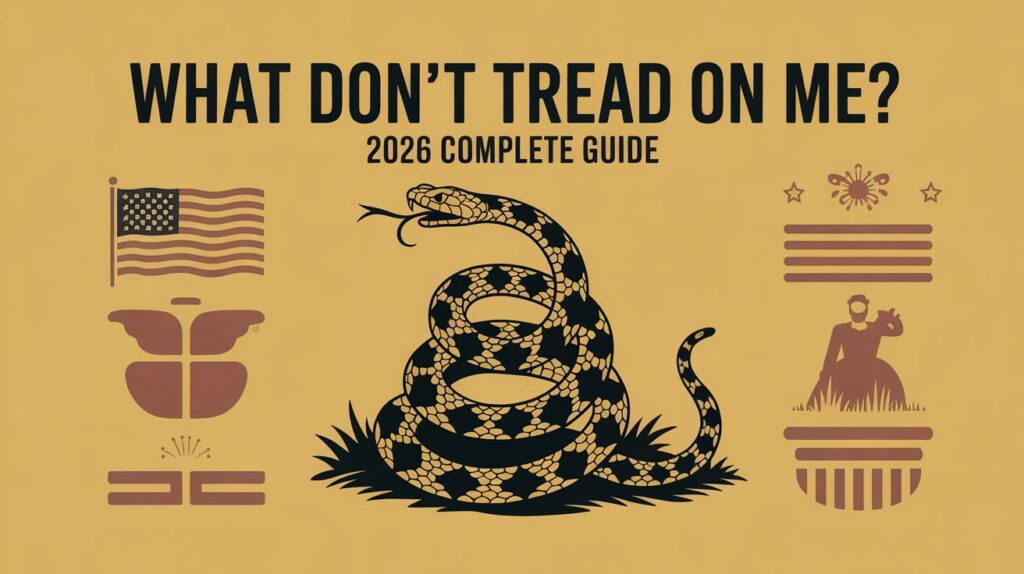
If you’ve ever seen a yellow flag with a coiled snake and the words “Don’t Tread on Me,” you may have wondered: what does don’t tread on me mean, and why does it still appear so often in conversations, protests, social media posts, clothing, and digital profiles?
The phrase “Don’t Tread on Me” first entered public consciousness in the late 18th century, long before the internet, texting, or modern slang. It originated during the American Revolutionary era, where it symbolized resistance to oppression and a demand for personal liberty. Over time, its meaning expanded, shifted, and—by 2026—became layered with historical, cultural, political, and personal interpretations.
Unlike many modern phrases that rise and fall with trends, “Don’t Tread on Me” has endured for centuries. In the digital age, it has taken on new life, appearing in memes, usernames, comment sections, and debates. For some, it represents freedom and independence. For others, it signals political identity or resistance to authority. And for many in 2026, it’s a phrase whose meaning depends heavily on context.
In this comprehensive guide, we’ll explore what does don’t tread on me mean in 2026, how its usage has evolved, how it appears in texting and social media, common misunderstandings, and why people continue to use it today.
What Does What Does Don’t Tread on Me Mean in 2026?
In 2026, “Don’t Tread on Me” generally means:
“Do not infringe on my rights, freedom, or autonomy.”
At its core, the phrase communicates resistance to control, defiance against oppression, and a demand for personal boundaries—whether those boundaries are political, social, or individual.
However, its meaning today is multidimensional, shaped by history, politics, online culture, and personal interpretation.
Core Meanings of “Don’t Tread on Me” in 2026
- Defense of personal liberty
- Resistance to authority or control
- Symbol of independence
- Political or ideological statement
- Cultural or historical reference
1. Personal Liberty
For many people, the phrase is about individual freedom.
Meaning:
“I want to live without unnecessary interference.”
Example:
“I value my privacy—don’t tread on me.”
2. Resistance to Authority
Used to express opposition to perceived overreach by institutions, governments, or organizations.
Example:
“Too many rules lately. Don’t tread on me.”
3. Independence & Self-Reliance
Some use it as a broader statement of self-sufficiency.
Example:
“I handle my own business—don’t tread on me.”
4. Political or Ideological Identity
In 2026, the phrase is often associated with political views—but not always uniformly.
Example:
“He had a ‘Don’t Tread on Me’ sticker on his truck.”
5. Historical Symbolism
For history enthusiasts, it remains a direct reference to its Revolutionary origins.
Modern Usage of What Does Don’t Tread on Me Mean

By 2026, “Don’t Tread on Me” appears across both offline and digital spaces, often with different tones depending on the platform and audience.
Offline Usage
- Flags and banners
- Clothing and accessories
- Tattoos
- Stickers and signage
Online Usage
- Social media bios
- Profile pictures
- Memes
- Comment debates
- Short-form video captions
Tone in Modern Usage
The phrase can feel:
- Serious
- Defiant
- Symbolic
- Provocative
- Historical
Context determines interpretation.
What Does What Does Don’t Tread on Me Mean in Texting & Social Media?
In texting and social media, “Don’t Tread on Me” is rarely used casually. Instead, it often carries intentional weight.
On Twitter (X)
Often used during debates or commentary.
Example:
“Personal freedoms matter. Don’t tread on me.”
On Instagram
Appears in bios, captions, or visuals.
Example:
“Freedom mindset 🇺🇸 Don’t tread on me.”
On TikTok
Used in historical, political, or ironic videos.
Example caption:
“When the HOA sends another letter 😤 don’t tread on me.”
In Text Messages
Less common, but used for emphasis.
Example:
“I respect rules, but don’t tread on me.”
Meme Usage
In 2026, memes often play with the phrase humorously.
Example:
“When someone touches your fries—Don’t Tread on Me.”
Examples of What Does Don’t Tread on Me Mean in Real Chats
Here are realistic examples showing how the phrase is used today.
Example 1: Political Context
Person A: “New regulations again?”
Person B: “Yeah… don’t tread on me.”
Example 2: Personal Boundaries
“I’m fine helping, but don’t tread on me.”
Example 3: Humor
“You ate my leftovers. Don’t tread on me.”
Example 4: Historical Discussion
“The Gadsden flag says ‘Don’t Tread on Me.’”
Example 5: Online Comment
“Freedom of choice matters—don’t tread on me.”
Misunderstood Meanings of What Does Don’t Tread on Me Mean
Because the phrase has been used in many contexts, it’s often misunderstood.
Common Misconceptions
❌ It always means extremism
❌ It always represents one political party
❌ It’s inherently aggressive
❌ It promotes violence
Reality in 2026
- The phrase predates modern politics
- Meanings vary widely by context
- Not all users intend the same message
- It can be symbolic, humorous, or historical
Is “Don’t Tread on Me” Threatening?
Generally, no. It’s a warning or boundary, not a threat. However, tone and context matter greatly.
Why People Still Use What Does Don’t Tread on Me Mean in 2026
Despite controversy and debate, the phrase remains relevant.
1. Historical Weight
Few phrases have such deep historical roots.
2. Strong Emotional Impact
It communicates resistance clearly and powerfully.
3. Identity Expression
For some, it represents values and beliefs.
4. Cultural Recognition
Most people instantly recognize the phrase.
5. Adaptability
It works in serious discussions and humorous memes alike.
Comparison Table: “Don’t Tread on Me” vs Similar Phrases (2026)
| Abbreviation | Full Form | Meaning | Usage Example | Popularity Score (2026) |
| DTM | Don’t Tread on Me | Do not infringe on my freedom | “DTM mindset” | ⭐⭐⭐⭐ |
| MYOB | Mind Your Own Business | Respect boundaries | “Just MYOB” | ⭐⭐⭐ |
| Hands Off | Hands Off | Don’t interfere | “Hands off my rights” | ⭐⭐⭐ |
| Live Free | Live Free | Freedom-focused mindset | “Live free or…” | ⭐⭐⭐⭐ |
| Stay Back | Stay Back | Keep distance | “Stay back” | ⭐⭐ |
2026 Digital & Cultural Context
Political Climate
The phrase remains visible during debates on rights and authority.
Meme Culture
Irony and satire have softened its tone online.
Education & History
Often discussed in classrooms and documentaries.
Fashion & Branding
Used as a retro-patriotic symbol.
When to Use “Don’t Tread on Me”
✔ Historical discussions
✔ Personal freedom statements
✔ Symbolic expression
✔ Satirical or humorous content
When to Avoid Using It
❌ Professional emails
❌ Sensitive discussions without context
❌ Situations where it may escalate tension
Conclusion
So, what does don’t tread on me mean in 2026?
At its heart, “Don’t Tread on Me” is a statement of resistance, autonomy, and self-determination. Its meaning has evolved from a Revolutionary-era warning into a modern phrase layered with historical significance, cultural symbolism, and personal interpretation.
In 2026, the phrase is neither obsolete nor one-dimensional. Instead, it remains a powerful expression—sometimes serious, sometimes symbolic, sometimes ironic—depending entirely on how, where, and why it’s used.
Understanding its history and modern usage allows you to interpret it accurately and engage with it thoughtfully.
Frequently Asked Questions (FAQ)
What does don’t tread on me mean literally?
It means “do not step on or oppress me.”
Is “Don’t Tread on Me” political?
It can be, but it also has historical and cultural meanings.
Where did “Don’t Tread on Me” originate?
It dates back to the American Revolutionary era.
Is it still relevant in 2026?
Yes, both culturally and digitally.
Can it be used humorously?
Yes, especially in memes and casual contexts.
Final Summary
- Originated in the 18th century
- Symbolizes freedom and resistance
- Meaning depends on context
- Widely recognized in 2026
- Used seriously, symbolically, or humorously
Understanding what does don’t tread on me mean helps clarify conversations around history, culture, and modern digital expression.