


If you’ve ever glanced at your car’s dashboard and noticed the ABS light, or heard someone ask what does ABS mean on a car, you’re not alone. This phrase has been part of automotive conversations for decades, but its relevance has only grown as vehicle technology has advanced. In 2026, ABS is no longer just a “nice-to-have” feature—it’s a core safety system found in nearly every modern vehicle on the road.
The phrase what does ABS mean on a car first started appearing in everyday conversations in the late 1980s and early 1990s, when anti-lock braking systems began transitioning from luxury vehicles into mainstream cars. At the time, drivers were curious—and sometimes confused—about a new warning light and unfamiliar braking behavior, especially during sudden stops.
As ABS became mandatory in many countries and standard across global car manufacturers, the term entered owner’s manuals, driving schools, mechanic shops, and eventually online search engines. By the early 2000s, “ABS” was one of the most commonly searched automotive acronyms.
Fast forward to 2026, and ABS has evolved far beyond its original role. It now works alongside electronic stability control (ESC), traction control systems (TCS), autonomous emergency braking (AEB), and advanced driver-assistance systems (ADAS). Drivers today ask what does ABS mean on a car not only out of curiosity, but to understand warning lights, safety features, repair costs, and how ABS interacts with modern driving technology.
In this comprehensive guide, we’ll explain exactly what ABS means on a car in 2026, how it works, how people talk about it today, common misunderstandings, real-life examples, and why ABS remains one of the most important safety systems in modern vehicles.
What Does What Does ABS Mean on a Car Mean in 2026?
In 2026, ABS stands for:
Anti-lock Braking System
Simple Definition
ABS is a vehicle safety system that prevents the wheels from locking up during hard braking, allowing the driver to maintain steering control and reduce the risk of skidding.
Why ABS Exists
Before ABS, sudden or emergency braking could cause wheels to lock, especially on:
- Wet roads
- Snow or ice
- Gravel
- Uneven surfaces
Locked wheels reduce traction and make steering nearly impossible. ABS solves this by automatically modulating brake pressure.
What ABS Means for Drivers in 2026
- Improved control during emergency braking
- Reduced risk of skidding
- Better steering capability under hard braking
- Enhanced integration with modern safety systems
In short, ABS helps you brake safely and steer at the same time.
Modern Usage of What Does ABS Mean on a Car
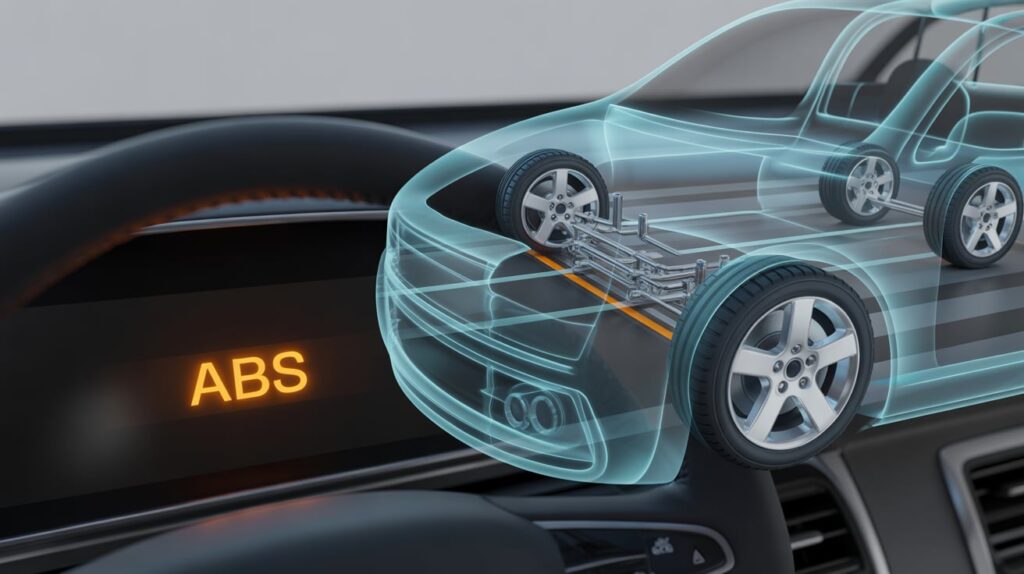
In 2026, ABS is discussed in far more contexts than just basic car ownership.
Common Situations Where ABS Is Mentioned
- Dashboard warning lights
- Vehicle safety reviews
- Driving test materials
- Insurance assessments
- Used car inspections
- Electric vehicle (EV) discussions
- Autonomous driving features
ABS in Modern Vehicles
ABS is now standard on:
- Gasoline cars
- Hybrid vehicles
- Electric vehicles (EVs)
- SUVs and trucks
- Motorcycles (in many regions)
How ABS Works (Simplified)
- Sensors detect wheel speed
- System detects potential wheel lock
- ABS rapidly applies and releases brake pressure
- Wheels keep rotating
- Driver maintains control
This process happens multiple times per second, far faster than any human could manage manually.
What Does ABS Mean on a Car in Texting & Social Media
With the rise of digital communication, ABS is frequently mentioned in texts, social media posts, forums, and car community chats.
Common Digital Contexts
- WhatsApp car groups
- Reddit automotive forums
- TikTok car safety videos
- YouTube comments
- Facebook Marketplace car listings
- X (Twitter) discussions
Examples in Text Messages
“My ABS light just came on—should I worry?”
“Does this model come with ABS?”
“ABS saved me during heavy rain.”
Social Media Usage (2026)
“Reminder: ABS doesn’t mean stop faster—it means stop safer 🚗”
“If your ABS light stays on, get it checked.”
“ABS + ESC = lifesaver on wet roads.”
In 2026, ABS is often mentioned alongside advanced safety tech, making it a regular topic in digital conversations.
Examples of What Does ABS Mean on a Car in Real Chats
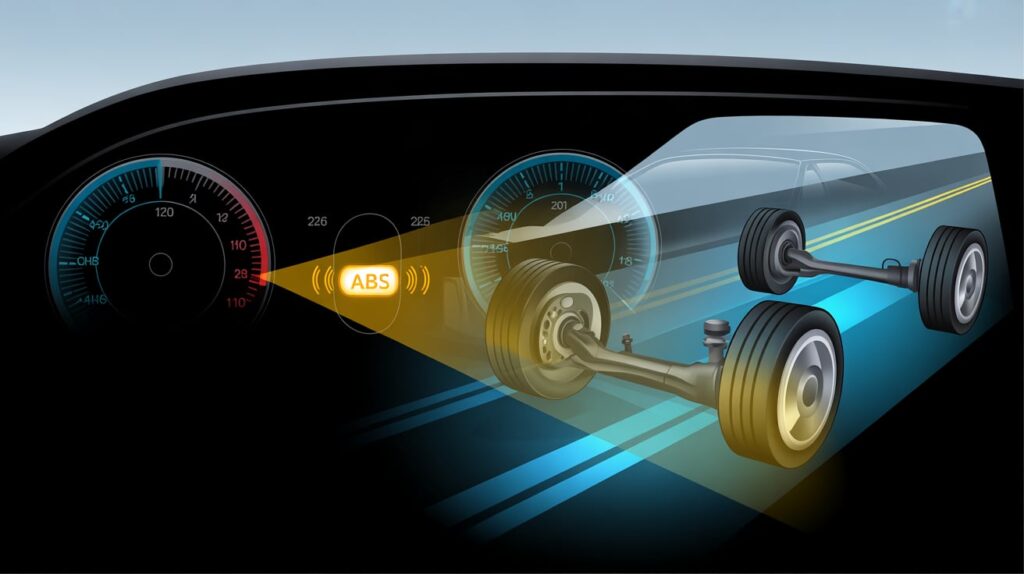
Example 1: Driver and Mechanic
Driver: “What does ABS mean on a car? My light is on.”
Mechanic: “It’s your anti-lock braking system. We should scan it.”
Example 2: Buying a Used Car
“This car has ABS, airbags, and traction control.”
Example 3: New Driver Conversation
“The instructor said ABS helps me steer while braking.”
Example 4: Online Forum
“ABS kicked in during snow—it felt like pulsing.”
Example 5: EV Owner Chat
“ABS works differently on EVs because of regen braking.”
These examples show how ABS is discussed in everyday, professional, and technical conversations.
Misunderstood Meanings of What Does ABS Mean on a Car
Despite being common, ABS is often misunderstood.
Common Misconceptions
1. ABS Means Shorter Stopping Distance
❌ Not always. ABS improves control, not necessarily stopping distance.
2. ABS Means You Can Drive Faster
❌ ABS is a safety system, not a performance boost.
3. ABS Stops the Car Automatically
❌ The driver must still apply the brakes.
4. ABS Is Only for Slippery Roads
❌ ABS works on dry roads too during hard braking.
5. ABS Light Means Brake Failure
⚠️ Not exactly. It means the ABS system has a fault, but basic braking still works.
Important 2026 Clarification
In modern cars, ABS is deeply integrated with other systems. A malfunction may also affect:
- Traction control
- Stability control
- Autonomous braking features
Why People Still Use What Does ABS Mean on a Car in 2026
Even after decades of use, people still search and ask about ABS.
Key Reasons
1. Safety Awareness
Drivers are more safety-conscious than ever.
2. Dashboard Warning Lights
ABS lights trigger immediate concern.
3. Used Car Market Growth
Buyers want to know what safety features they’re getting.
4. Advanced Vehicle Tech
ABS now interacts with AI-based systems.
5. Global Driving Education
Driving schools still teach ABS behavior.
In 2026, understanding ABS is part of being an informed driver.
Comparison Table: ABS vs Similar Automotive Systems (2026)
| Abbreviation | Full Form | Meaning | Usage Example | Popularity Score (2026) |
| ABS | Anti-lock Braking System | Prevents wheel lock during braking | “ABS activated” | 9.9/10 |
| ESC | Electronic Stability Control | Prevents loss of control | “ESC saved me” | 9.8/10 |
| TCS | Traction Control System | Limits wheel spin | “TCS engaged” | 9.6/10 |
| AEB | Autonomous Emergency Braking | Auto braking to avoid collisions | “AEB activated” | 9.7/10 |
| EBD | Electronic Brakeforce Distribution | Optimizes brake force | “EBD balances braking” | 9.4/10 |
2026 Context: ABS in Modern Automotive Technology
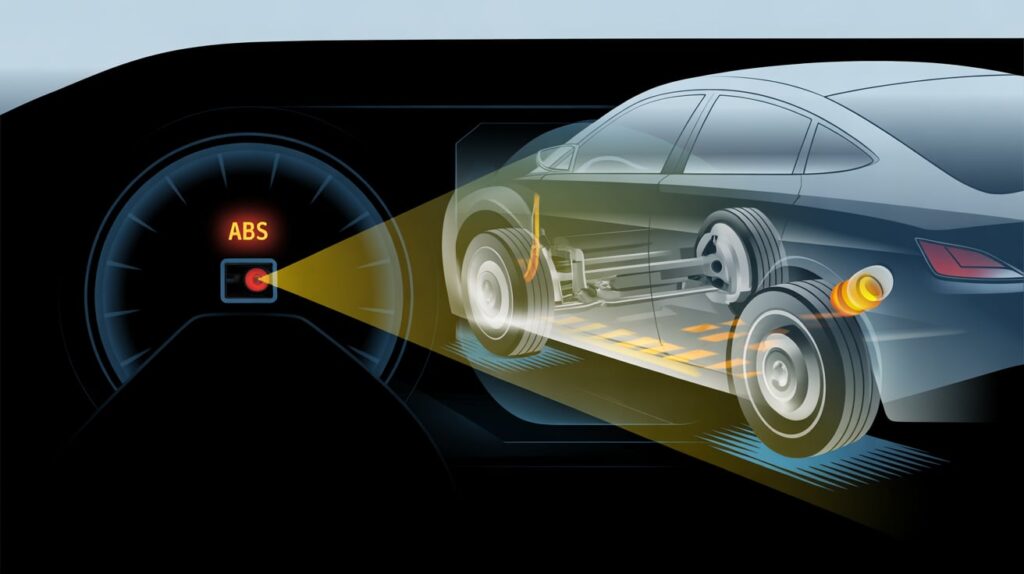
In 2026, ABS is no longer a standalone feature.
Integration with Modern Systems
- AI-assisted braking
- ADAS platforms
- Self-driving technologies
- Regenerative braking in EVs
- Smart road communication systems
ABS and Electric Vehicles
ABS works alongside:
- Regenerative braking
- Battery management systems
- Torque vectoring
Data & Diagnostics
Modern ABS systems:
- Log performance data
- Communicate with vehicle software
- Support predictive maintenance alerts
ABS has evolved from a mechanical innovation into a smart digital safety system.
Conclusion
So, what does ABS mean on a car?
In 2026, ABS stands for Anti-lock Braking System, a vital safety feature that prevents wheel lock-up during braking and helps drivers maintain steering control. While it originated decades ago, ABS has evolved into a core component of modern vehicle safety, working seamlessly with advanced technologies like stability control, AI-assisted braking, and autonomous driving systems.
Understanding ABS helps drivers:
- Respond correctly in emergencies
- Interpret dashboard warning lights
- Make informed vehicle purchases
- Drive more confidently and safely
ABS isn’t just a feature—it’s a foundation of modern road safety.
FAQ: What Does ABS Mean on a Car?
1. What does ABS stand for?
Anti-lock Braking System.
2. Is ABS mandatory in 2026?
Yes, in most countries for new vehicles.
3. Can I drive with the ABS light on?
Yes, but without ABS functionality—get it checked.
4. Does ABS work on snow and ice?
Yes, and it’s especially helpful.
5. Does ABS stop the car faster?
Not always—it improves control, not braking distance.
Final Summary
The keyword what does ABS mean on a car remains highly relevant in 2026. ABS is a critical safety system designed to prevent wheel lock-up and maintain control during braking. As vehicles become smarter and more autonomous, ABS continues to play a central role in keeping drivers and passengers safe on the road.